


Your First Step in Determining Eligibility for CPA Historic Preservation Funds
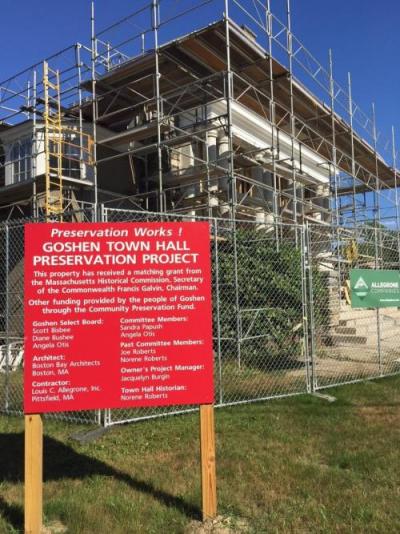 When a Community Preservation Committee (CPC) receives a project application for the acquisition, preservation, rehabilitation, or restoration of a historic resource, there are many steps to determining if the project is eligible. One of the first steps is to determine whether the asset that will receive CPA funding is on the State Register of Historic Places, a prerequisite to receiving CPA funding.
CPC's can easily check to see if the historic resource in question is listed on the State Register of Historic Places (SHRP) by using the online Massachusetts Cultural Resources Information System (MACRIS). Note that if a property is not listed on the State Register, then the CPC or the project proponent must request a determination hearing from the local Historic Commission on the significance of the resource to the history, culture, archeology, or architecture of the community.
Here are some simple steps to get you started:
1. Visit https://mhc-macris.net -- read through the initial disclaimer page and click on the button to acknowledge and accept the terms.
2. Once you’ve reached the main page of the MACRIS database, ensure that the search filters are enabled along the lefthand side. If the filter options are not visible, click the “Search Filters” button towards the top of the page.
3. Use the “Refine by City/Town” filter and enter the name of your municipality. Then use the "Address" or "Property Name" fields to search for your specific historic resource in the database.
4. If the property appears in your search results, you will now need to look in the "Designation" column to find out whether the property is listed on the State Register of Historic Places. One or more of the qualifying criteria for inclusion on the State Register of Historic Places must be listed in the "Designation" field in order for the property to qualify for CPA funding:
- Local Historic District (LHD)
- Local Landmark (LL)
- MA Archaeo/Historic Landmark (MA/HL)
- Nat’l Historic Landmark (NHL)
- Preservation Restriction (PR)
5. If the "Designation" field is blank, or does not include one of the above criteria, the property is not included on the State Register of Historic Places. In order to consider this property for CPA funding, you will need to request a significance determination from your local Historic Commission in order to use CPA for any type of acquisition, preservation, rehabilitation, or restoration of the property.
6. If the "Designation" field includes one or more of the criteria for inclusion on the State Register of Historic Places, it qualifies the property for CPA funding. You can click on the corresponding field within the “MHC ID” column for additional information about the property.
Keep in mind the following tips while using the MACRIS database:
- Only some of the properties in the MACRIS database are included on the State Register of Historic Places - make sure to follow the above steps to ensure that the property has one of the qualifying criteria to be included on the State Register.
- Just because a property is listed in the State Register, that does not necessarily mean a proposed project would be an allowable use of CPA funds.
- MACRIS does not contain information on archaeological sites.
- The MHC adds new records to the database on a daily basis.
- The MHC does not guarantee the accuracy of the database.
If you have trouble using MACRIS there is a hard copy of the State Register of Historic Places on file with every local Historic Commission. You can also contact the Massachusetts Historical Commission at (617) 727-8470 or [email protected]
Further Resources
- Click here to access the MACRIS database.
- To learn more about qualifying for historic preservation CPA funds, see our article, "Which Historic Projects Qualify For CPA Funding? Examining The Procedures You Must Follow For Historic Appropriations."
- Local historic districts are automatically listed on the State Register of Historic Places, making many of the properties within these districts eligible for CPA funding. For more information on establishing a local historic district, you can download this guide from the Massachusetts Historical Commission
March 2025