


A Review of the Prohibition on Funding Artifical Turf with CPA
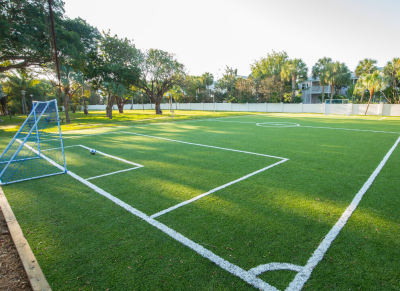 A 2012 amendment to the CPA legislation provided CPA municipalities with expanded options to use CPA funds in the outdoor recreation category. However, the legislation also contained a new limitation on using CPA funds for athletic fields with artifical turf. This language was a compromise between recreation advocates both for and against the use of artifical turf. Acknowledging the controversy, the legislature included one simple line in Section 5(b)2 of the CPA legislation:
“With respect to recreational use, the acquisition of artificial turf for athletic fields shall be prohibited.”
This change to CPA has led to differing interpretations by communities on the extent to which CPA funds can participate in projects involving artificial turf. While it's generally fine for CPA to fund natural grass fields, the rules regarding CPA funding for artifical turf can be different depending on the type of recreational asset:
- Outdoor Stadiums
- Playgrounds or Dog Parks
- Athletic Fields
Interpretations of CPA’s Artificial Turf Prohibition
1. Artifical Turf for Outdoor Stadiums
It’s quite clear that CPA cannot fund any type of athletic field inside of a stadium, regardless of whether it is a grass field or artificial turf. Since the beginning of CPA, the legislation has always included a prohibition on spending CPA funds on any component of a stadium project, as per the definition of “recreational use” in Section 2 of CPA :
"active or passive recreational use including, but not limited to, the use of land for community gardens, trails, and noncommercial youth and adult sports, and the use of land as a park, playground or athletic field. 'Recreational use' shall not include horse or dog racing or the use of land for a stadium, gymnasium or similar structure."
This type of project is typically found on school property, often where the varsity high school football team plays. Because these facilities are quite large, they do not qualify for CPA funding; CPA funding is intended for open space as close as possible to its natural state.
2. Artifical Turf for Playgrounds, Dog Parks, Etc.
While many CPC's assume that CPA's artifical turf prohibition extends to all types of recreation projects, this isn't necessarily the case. Because the language in the CPA legislation only prohibits “artificial turf for athletic fields,” small turf surfaces used in other recreational situations, such as a playground or dog park, would likely be eligible for CPA funding.
3. Artifical Turf for Athletic Fields
For non-stadium projects, many communities have struggled to interpret the CPA language regarding turf. Some decided that CPA is prohibited from funding any element of a field project involving artificial turf. Other towns have tested the legal limits of this language by using CPA funding on related components of an artificial turf installation while paying for the turf itself from a non-CPA funding source.
This topic has left many Community Preservation Committees to wonder: where is the line drawn? In one CPA community, this question became a sticking point in a lawsuit filed against the town.
 North Andover CPA Recreation Lawsuit
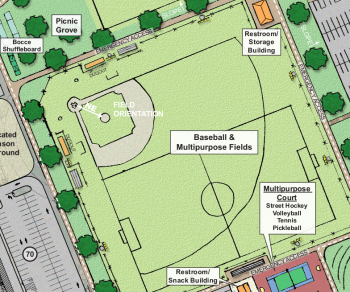
In March of 2021, the town of North Andover was sued over a $6 million CPA-funded outdoor recreation project (Silverio, et al. v. Town of North Andover). While this is a lower court decision, it’s the first clear sign from the courts on how communities should be looking at turf projects.
While there were many components to this case, one critical element concerned the use of CPA funds on the non-surface elements of an artificial turf field. While the town and the plaintiffs agreed that CPA funds cannot be used for the acquisition of the turf surface, they argued over whether CPA could be used for the site preparation work that is necessary for the turf’s installation. The court ultimately decided that because the purchase of artificial turf is not an allowed CPA expense, the work necessary to install the artificial turf should similarly be prohibited from CPA funding. Judge John T. Lu wrote the following in his ruling on the case:
“Synthetic turf fields are constructed as a system of interconnected parts, and it is not logical to allow funding for the work needed to ready a site for the installation of a turf field (removal of grass, drainage, plumbing, curbing …) but not for the turf itself.”
For this reason, the court ultimately prohibited the Town from spending any CPA funds related to the project’s artificial turf fields.
A Cautionary Tale for CPA Communities
One point of confusion that remains can be found in the marketing materials provided by companies that construct artificial turf fields for municipalities. While these materials often say it’s perfectly fine to use CPA funds for elements of these projects, the vendors have a vested interest in promoting this interpretation. However, it’s the municipality that would face the legal consequences of using CPA funds improperly, not the vendor.
Given the court's decision in the North Andover lawsuit, it may be wise for municipalities to find a non-CPA funding source for all elements of a recreational field that contains artificial turf.
May 2025